Anúncios
Need a car insurance policy right away? Getting immediate coverage is not only possible, it’s easier than you may think. You can get an online quote for car insurance in just a few minutes. If you like the price, you can often buy the policy and get protection right after.
This process works completely online. You provide your personal and vehicle information. Then, you receive quotes from various companies. After selecting a plan, you make a payment. Your coverage can start immediately, often with digital proof sent to your email.
Anúncios
Having your details ready speeds everything up. Keep your driver’s license and your vehicle’s year, make, and model handy. This information helps generate accurate quotes and lets you finish the purchase faster.
Anúncios
It is a legal necessity to carry proof of insurance in your vehicle from the moment you start driving. While getting covered quickly is convenient, it’s essential to choose adequate coverage limits. This helps you avoid being underinsured after an accident.
With a little preparation, you can secure a policy quickly and confidently. Comparing quotes from multiple insurers is a smart move. It helps you find the best rate for your needs. Remember, your protection only applies to incidents after the policy effective time.
Key Takeaways
- You can obtain a car insurance policy and legally drive within hours, often with instant digital proof.
- The online process involves providing your details, receiving quotes, selecting a policy, and making a payment.
- Having your driver’s license and vehicle information ready significantly speeds up the quote process.
- Carrying proof of insurance in your vehicle is a legal requirement from the moment you begin driving.
- Comparing quotes from several companies is the best way to find a good rate for your situation.
- Your coverage is effective only from the policy start time, not for any prior accidents.
- Selecting adequate protection limits is crucial to ensure you are not underinsured.
What Same-Day Auto Insurance Is and How It Works
You can complete an online application and receive protection within hours. This type of car insurance plan becomes active on the calendar day you apply and pay. It lets you drive legally almost immediately after purchase.
The standard mechanism is straightforward. First, you fill out a digital form with your personal and vehicle details. Next, you receive real-time quotes from various companies. Then, you choose your coverage options and submit payment.
Your confirmation and proof of insurance typically arrive via email or through a digital portal. The whole process is designed for speed when you need it most.
Coverage effective time is usually tied to payment processing. Having your payment method ready is crucial for immediate activation. With many insurers, including Progressive, your policy is effective once payment clears.
However, not all companies offer true same-day activation. Some may have waiting periods or require additional verification. Always ask your insurer or agent exactly what day and time the policy takes effect.
Insurance brokers, like The Baldwin Group, can shop multiple insurers on your behalf. This can expedite the process when you’re pressed for time.
Instant proof of coverage is provided by most providers. A digital insurance card is legally acceptable in all states. You should save this document on your phone or print a copy for your vehicle.
Important clarification: This type of protection does not cover accidents that occurred before the policy start time. It only applies to future incidents from the effective moment forward.
The cost for immediate coverage may be higher than if you plan ahead. Still, available discounts may apply to help with the rate. Comparing several quotes remains the best approach.
Understanding how this process works empowers you to make informed decisions. Confirm the exact effective time with your chosen company to avoid any gaps in your protection.
Common Reasons You Might Need Insurance Immediately
Several everyday events create an urgent need for immediate vehicle coverage. You might be making a major purchase or dealing with a sudden legal requirement. In these cases, waiting days for a policy is not an option.
Knowing the common scenarios helps you prepare. You can gather your information ahead of time. This readiness lets you secure protection within hours.
Purchasing a New or Used Vehicle
Buying a car is exciting. However, dealerships and lenders almost always require proof of insurance before you drive off the lot. This rule applies to both new and used vehicles.
You need a valid car insurance policy that lists the specific vehicle. The policy must be active at the moment you take possession. This is a non-negotiable condition for legal operation.
Having the Vehicle Identification Number (VIN) ready is crucial. You can often get a quote and bind coverage using your phone right at the dealership. This process avoids any delay in taking your new car home.
Switching Insurance Providers
You might decide to change insurance companies for a better rate or service. To avoid a costly lapse, your new policy should start when the old one ends.
This transition requires precise timing. Shopping for quotes a week before your renewal date is smart. It gives you time to compare offers without pressure.
If you find a better plan, you can set the effective date for the day after your current policy expires. Many insurers allow you to do this entirely online. You receive instant confirmation and proof of coverage.
Adding a Vehicle or Driver to Your Policy
Life changes mean your insurance needs change too. Adding a second car or a new driver to your household requires an immediate update to your coverage.
When you acquire another vehicle, you must add it to your plan. Most companies let you do this through their website or mobile app. The coverage can often start right away.
Adding a driver, like a teenager who just got their license, is similar. They need to be listed on the policy before they legally drive. Failing to do this could void your protection in an accident.
Complying with State Laws After a Lapse
Your previous insurance might lapse due to non-payment or an administrative error. Driving without coverage is illegal in every state and carries severe penalties.
You must obtain a new policy immediately to restore your legal standing. States impose fines, license suspension, and even vehicle impoundment for uninsured driving.
Your future insurance rates will also likely increase. Acting fast to get covered limits these consequences. Have your driver’s license and vehicle details handy to speed up the quote process.
Common Scenarios Requiring Immediate Coverage
| Reason for Immediate Need | Typical Action Required | Key Tip for Speed |
|---|---|---|
| Buying a New or Used Car | Provide proof of insurance before driving off the dealership lot. | Have the VIN and driver details ready to get a quote on the spot. |
| Switching Insurance Providers | Secure a new policy to start before the old one lapses. | Compare online quotes from multiple companies in advance. |
| Adding a Vehicle to a Policy | Endorse the existing policy or purchase a new one for the additional car. | Use your insurer’s mobile app for instant policy updates. |
| Adding a Driver to a Policy | Add the new driver to the policy effective immediately. | Notify your insurer before the new household member starts driving. |
| Policy Lapse | Obtain new coverage immediately to comply with state law. | Gather your license and vehicle information quickly to apply. |
In each situation, the goal is to avoid a gap in your protection. Using online tools or speaking with a broker can get you covered the same day. Always confirm the exact effective time and day with your chosen company.
These common life events make immediate auto-insurance a practical and often necessary solution. Being prepared ensures you stay legal and protected on the road.
Situations That Can Delay or Prevent Same-Day Coverage
Not every driver or vehicle qualifies for instant policy activation. While many online applications are processed quickly, specific factors can halt the process. Understanding these hurdles helps you plan effectively and avoid frustration.
Some circumstances require extra verification from insurance companies. This can add hours or even days to your timeline. Being aware of these potential delays sets realistic expectations.
Driving a Specialty or Classic Car
Owning a rare, vintage, or high-value vehicle changes the insurance landscape. Standard car insurance policies are not designed for these automobiles.
Specialty coverage often requires a professional appraisal. The insurers need to confirm the car‘s true value and condition. This underwriting step cannot be completed in minutes.
You may need to provide photos or service records. This detailed process means you rarely get protection the same day. Planning ahead is essential for classic car owners.
Having a Risky Driving Record
Your driving record is a key factor for any quote. A history of traffic tickets, at-fault accidents, or a DUI conviction raises red flags.
Such a record signals higher risk to insurance providers. They will likely perform a more thorough review of your history. This additional scrutiny can delay approval.
In some cases, standard companies may decline to offer a policy. You might need to seek a non-standard insurer, which takes more time. Your final rate will also be significantly higher.
A suspended or revoked driver‘s license is a major obstacle. You typically cannot get a new insurance policy until your driving privileges are restored.
Missing Essential Documents or Information
The online quote and application process demands specific details. If you cannot provide them, you cannot finish.
You must have your driver‘s license number and your vehicle identification number (VIN). Details from your current car insurance policy are also often needed.
Without this information, the system cannot generate accurate quotes. You will have to pause your application to find the missing items. This simple oversight can cost you the chance for immediate coverage.
Needing Coverage for a Prior Accident
This is a critical point to understand. No auto insurance policy will cover an accident that already happened.
If you had a crash earlier today without insurance, buying a policy now will not help. It is legally impossible to backdate coverage. Attempting to do so is fraud.
Submitting a claim for a pre-existing incident is a serious offense. You could face penalties for insurance fraud. Always be honest about the timing of any event.
Other issues can also cause delays. A recent lapse in coverage might trigger a waiting period. Some insurers require proof of prior insurance before issuing a new plan.
To avoid these problems, gather all your details before you start. Be truthful about your driving history. If you have a poor record, consider using a broker.
A broker can shop your case to multiple insurers at once. This might expedite finding a company willing to cover you.
If you anticipate needing protection soon, begin the process early. Account for potential hurdles. Knowing what can slow things down helps you navigate the path to coverage confidently.
Essential Information to Have Ready for Your Quote
Before you click ‘get quote,’ ensure you have these critical pieces of information ready. Being prepared turns a lengthy task into a quick one. It can reduce your application time from hours to minutes.
Gathering your details ahead of time is the smartest move. This preparation lets you complete the quote process without interruption. You will receive accurate quotes and can bind coverage faster.
Personal and Driver Details
You must provide identifying information for every person on the policy. This includes the registered owner and all regular drivers.
Have each person’s full legal name and date of birth ready. You also need their home address and driver‘s license number. This data is used to pull motor vehicle records.
Some companies may ask for a Social Security Number. They use it for a soft credit check, which can influence your final rate. Be prepared to provide it if requested.
Vehicle Information and VIN
Your car‘s specifics are crucial for an accurate quote. Know the year, make, model, and current mileage. Also note the year you purchased the vehicle.
The most important item is the Vehicle Identification Number (VIN). This unique 17-digit identification number is your car‘s fingerprint.
You can find the VIN on the dashboard near the windshield or on the driver’s side door jamb. It is essential for accurate vehicle identification.
Don’t forget the primary garage location. If you park the car at a different address than your home, you need to disclose that. This affects risk assessment.
Current Insurance and Driving History
If you already have an insurance policy, have your current documents handy. Insurers want to know your prior company, policy number, and coverage limits.
They also need the expiration date. This helps them provide a seamless switch. It ensures you avoid a lapse in protection.
Your driving history is a major rating factor. Be ready to list any recent accidents or traffic tickets. Insurance providers will check your motor vehicle record anyway.
Also know your average daily commute distance. Your annual mileage estimate is used to gauge risk exposure. More miles often mean a higher premium.
Payment Method for Your First Premium
To activate coverage immediately, you must pay the first premium. Have a valid payment method ready at the end of the application.
Most insurers accept credit cards, debit cards, or direct bank transfers. Your policy becomes effective once payment is processed.
This step is non-negotiable for instant activation. Without payment, your car insurance quote remains just a quote. You won’t have active protection.
Checklist of Required Information for a Quick Quote
| Information Category | Specific Details Needed | Why It’s Important |
|---|---|---|
| Personal & Driver Details | Full name, date of birth, home address, driver’s license number for all drivers. Social Security Number (sometimes). | Verifies identity and driving record. Credit checks may affect your rate. |
| Vehicle Information | Year, make, model, mileage, purchase year, garage address. The 17-digit Vehicle Identification Number (VIN). | Accurately identifies the car and assesses its value and risk profile. |
| Current Insurance & History | Current insurer name, policy number, coverage limits, expiration date. List of recent accidents or violations. | Provides continuity for switching insurers. Driving history directly impacts your premium. |
| Usage Details | Average daily commuting distance, estimated annual mileage. | Measures how much you drive, which correlates with accident risk. |
| Payment Information | Credit/debit card number or bank account details for the first payment. | Required to bind the policy and make coverage effective immediately. |
Organizing this information before you start is the ultimate key. It empowers you to secure protection on the same day without delays. A smooth process leads to a faster, more confident purchase.
Remember, a complete car insurance quote requires accurate data. Taking five minutes to gather your details can save you an hour of frustration. Start your search prepared.
Understanding the Key Types of Coverage Available
Knowing what each part of your car insurance covers is the first step to building a policy that truly protects you. A standard plan is a bundle of several different coverage types. Each one handles a specific kind of financial risk on the road.
Understanding these options helps you make smart choices. You can select the right balance of protection and cost for your situation.
Liability, Collision, and Comprehensive
Liability coverage is the foundation. It is legally required in almost every state. This part of your policy pays for damages you cause to others.
It includes two main parts: bodily injury and property damage liability. If you are at fault in an accident, it covers the other party’s medical bills and repairs to their property.
Collision coverage pays for damage to your own vehicle from a crash. It applies whether you hit another car or an object like a tree. You choose a deductible, which is the amount you pay out-of-pocket before this coverage kicks in.
Comprehensive coverage handles non-collision damage. It protects your car from theft, vandalism, fire, or severe weather. This coverage also has a deductible.
If you lease or finance your car, the lender will require both collision and comprehensive. They want their financial interest protected.
Uninsured/Underinsured Motorist Protection
This is a critical layer of safety. Uninsured/underinsured motorist (UM/UIM) protection covers you if you’re hit by a driver with no insurance or too little insurance.
It can pay for your medical bills and car repairs in that scenario. Despite laws, many drivers on the road lack adequate coverage.
Adding uninsured underinsured motorist protection to your policy is a smart move. It shields you from the costs others should have covered.
Personal Injury Protection (PIP) and Medical Payments
These coverages focus on medical expenses. Personal Injury Protection (PIP) is a “no-fault” coverage. It pays for medical costs, lost wages, and other expenses for you and your passengers after an accident.
Payment happens regardless of who caused the crash. PIP is required in some states and optional in others.
Medical payments coverage (MedPay) is similar but more limited. It typically covers just medical and funeral bills for you and your passengers. It applies no matter who is at fault.
Every state sets minimum required coverage levels. These minimums are often too low to provide real financial security after a serious accident. It is wise to purchase limits higher than the state minimum.
You can also add other useful options. These include rental reimbursement, roadside assistance, and gap insurance. Consider these based on your needs and budget.
Summary of Key Car Insurance Coverages
| Coverage Type | What It Pays For | Key Notes |
|---|---|---|
| Liability | Bodily injury and property damage you cause to others in an at-fault accident. | Mandatory in most states. State minimums apply. |
| Collision | Repairs to your own vehicle after a collision with another car or object. | Subject to a deductible. Often required by lenders. |
| Comprehensive | Damage to your car from theft, vandalism, fire, hail, or other non-collision events. | Subject to a deductible. Often required by lenders. |
| Uninsured/Underinsured Motorist (UM/UIM) | Your injuries and property damage if hit by a driver with no or insufficient insurance. | Highly recommended. Coverage limits vary. |
| Personal Injury Protection (PIP) | Medical expenses, lost wages, and other costs for you and passengers, regardless of fault. | Required in some “no-fault” states. Optional elsewhere. |
| Medical Payments (MedPay) | Medical and funeral bills for you and passengers after an accident, regardless of fault. | More limited in scope than PIP. Often has lower coverage limits. |
Understanding these coverage types empowers you. You can review quotes from different companies with confidence. You will know what each part of the insurance policy does.
This knowledge helps you build a car insurance policy that offers real protection without overspending. Take the time to learn these details before you buy.
How to Choose the Right Limits and Deductibles
Your policy’s financial backbone is built on two key decisions: your coverage limits and your deductible amounts. These choices directly control your protection level and your premium rate. Making informed selections here tailors your car insurance to your personal financial situation.
Coverage limits represent the maximum amount your insurer will pay per accident. Choosing higher limits provides more financial protection but increases your premium. State minimum liability limits are often insufficient for real-world costs.
Experts frequently recommend considering higher limits, such as 100/300/100. This means $100,000 per person for bodily injury, $300,000 per accident, and $100,000 for property damage. This level better shields your assets from a lawsuit.
Skimping on limits to save a small amount of money can leave you dangerously underinsured after a serious crash. The savings are rarely worth the massive financial risk.
A deductible is the amount you pay out-of-pocket before your insurance kicks in for a claim. Selecting a higher deductible lowers your monthly premium. You must choose an amount you can comfortably afford in an emergency.
For collision and comprehensive coverage, common deductible amounts are $500 or $1,000. Your vehicle‘s value heavily influences this choice. For an older car with low market value, you might opt for a higher deductible or even skip these coverages entirely.
Some companies offer programs that can reduce your deductible over time. These include vanishing deductibles or rewards for safe driving. Ask your insurer about such options when you get a quote.
Your final rate is also shaped by discounts. Bundling policies, maintaining a clean driving record, and even getting your insurance quote in advance can lower your price. Providers like Progressive may offer discounts for quoting a certain number of days before you need the policy.
To find your ideal balance, use online calculators or speak with an agent. They can help you weigh limits, deductibles, and premium costs based on your budget. Having all your driver and vehicle information ready makes this process smooth.
Thoughtful selection of these details ensures your auto insurance policy offers real security. It prevents you from being underinsured while keeping costs manageable. This is how you build a car insurance plan that works for you.
Step-by-Step Guide to Buying Same-Day Auto Insurance Online
This practical guide walks you through the exact stages of purchasing car insurance with immediate coverage online. Following a clear sequence turns a potentially stressful task into a smooth, efficient process. You can secure a valid car insurance policy and be on the road legally in a short amount of time.
Step 1: Gather Your Documents and Information
Preparation is the key to speed. Before you begin your online quote, assemble all necessary details. This includes every driver‘s license and the vehicle identification number (VIN) for each car.
Also gather your current insurance documents and know your driving record. Having this information ready prevents you from having to pause and search mid-application. It ensures the quotes you receive are accurate from the start.
Step 2: Get and Compare Quotes from Multiple Insurers
Now, visit the websites of several insurance companies or use a broker service. Enter your prepared information into their online car insurance quote tools. You will receive real-time insurance quotes in just minutes.
Do not settle for the first offer. It is crucial to compare quotes from at least three different insurers. Look beyond the bottom-line price. Compare the coverage details, customer service ratings, and available discounts side-by-side.
Comparing multiple quotes is the single most effective way to find a competitive rate and suitable protection for your needs.
Step 3: Select Your Policy and Customize Coverage
Review your quotes carefully. Select the policy that best aligns with your budget and coverage needs. This is where you fine-tune your choices.
Refer back to your understanding of coverage types. Adjust deductibles, add-ons, and liability limits to build a plan you’re comfortable with. This customization ensures your insurance offers real financial protection.
Step 4: Finalize the Purchase with Your Initial Payment
Once you’ve selected your plan, you’ll complete the online application. Double-check all entered information for accuracy. Any errors can delay your coverage.
The final step is submitting your first premium payment. Use a credit card, debit card, or electronic check. Your insurance policy becomes legally effective as soon as the payment is processed by the insurers.
You will receive instant confirmation and digital proof of insurance via email or a mobile app. Save this document on your phone and print a copy for your car. The entire process, from first quote to active coverage, can often be completed in under an hour when you’re prepared.
Following these four steps systematically removes the guesswork. It makes buying auto insurance online a straightforward and confident experience.
How to Get Your Instant Proof of Coverage
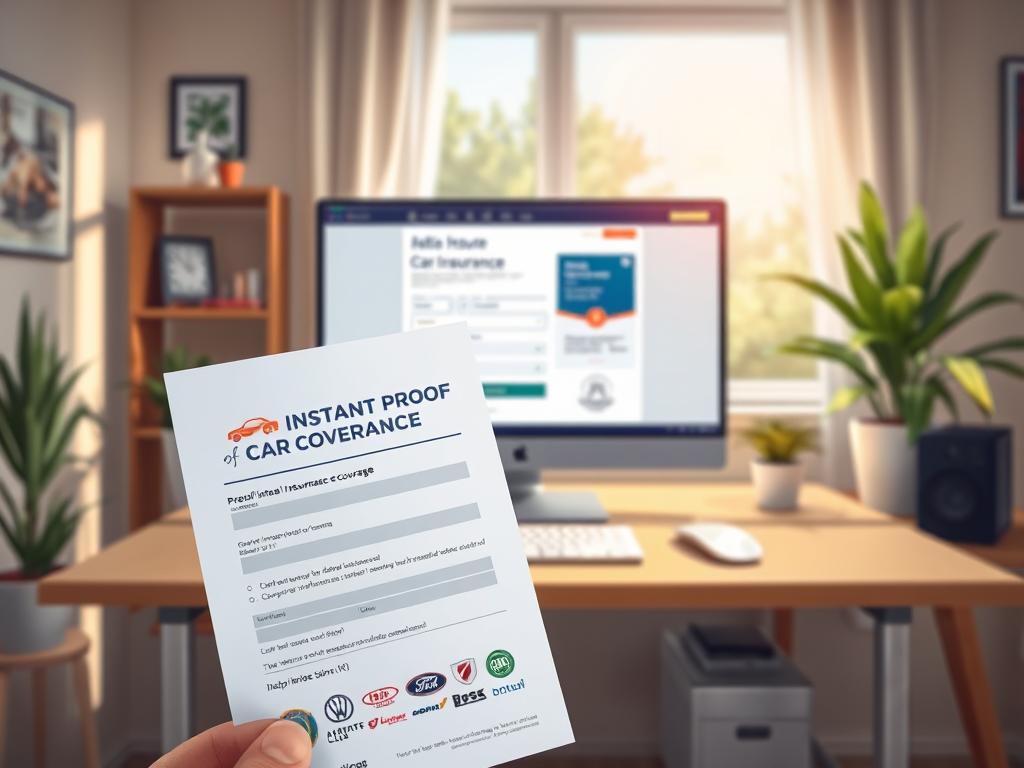
Instant proof of insurance transforms your quote into a legally binding shield. Once your payment is processed and your coverage is active, securing this documentation is your next urgent task.
This proof is your tangible evidence of a valid car insurance policy. You need it before you drive even a single mile. Most providers deliver it digitally within minutes of purchase.
Digital Insurance Cards and Temporary Documents
Your insurance company will typically email a link to your digital ID card right away. This e-card is a PDF or image file containing all your policy details. You can access it through your insurer’s website or mobile app.
These digital documents are legally accepted in all 50 states. They offer immense convenience, reducing paper clutter. You can instantly show proof on your smartphone during a traffic stop.
Many insurers also provide a temporary, printable document immediately. This serves as valid proof until your physical cards arrive by mail. It’s crucial for situations where you need a hard copy on the spot.
Always save a screenshot or download the PDF to your phone. This ensures access even with poor internet connectivity. Some company apps, like those from Liberty Mutual, let you store ID cards, pay bills, and file claims all in one place.
Why Immediate Proof is Legally Necessary
Every state mandates that you carry proof of insurance in your vehicle. Failure to present it during a traffic stop can lead to severe penalties. These include fines, driver‘s license suspension, or even vehicle impoundment.
Car dealerships, lenders, and registration offices also require this proof. They need to verify active coverage before finalizing a sale or loan. You cannot drive a newly purchased car off the lot without it.
Presenting expired or invalid proof is often treated the same as having no insurance at all. The legal and financial risks are simply too great to ignore.
Your proof document includes key information: your name, policy number, effective dates, vehicle details, and coverage types. If you switch policies, immediately replace the old document with the new one. This avoids the mistake of showing an expired card.
Comparing Your Proof of Insurance Options
| Proof Type | How to Get It | Best For | Important Notes |
|---|---|---|---|
| Digital ID Card (E-Card) | Email link, insurer’s website, or mobile app immediately after purchase. | Everyday driving, quick access during traffic stops, reducing paper use. | Legally valid in all states. Save a screenshot for offline access. |
| Temporary Printable Document | Available for download from your online account portal right after binding. | Immediate hard-copy needs at dealerships or for vehicle registration. | Valid until official cards arrive by mail, typically within 7-14 days. |
| Insurer Mobile App | Download your provider’s app and log in to access digital cards and policy management. | Managing your entire policy, storing cards, making payments, filing claims. | Integrates proof with other features. Requires smartphone and account setup. |
| Official Physical Cards | Mailed to your address by your insurance company after policy purchase. | Keeping a permanent hard copy in your glove compartment as a backup. | Allow a few business days for delivery. Keep them with your vehicle registration. |
Securing your instant proof is the final, crucial step in the auto insurance process. It ensures you are legal and protected on the road from the moment your coverage begins. Do not consider your purchase complete until you have this document in hand—or on your phone.
Conclusion
Taking control of your financial safety on the road begins with a simple online action. When life demands immediate protection, securing a car insurance policy that starts today is a practical solution.
Being prepared makes the process fast. Have your driver and vehicle information ready. Then, compare quotes from multiple companies to find the best rate.
Understanding your coverage options lets you choose wisely, not just cheaply. Remember, instant proof of insurance is legally required the moment you drive.
If you need coverage now, start by getting a quote. An advisor can help you get protected quickly. Don’t wait—begin your search today.